HPR-3P (Reta)
Price range: $66.00 through $96.00
Select options
This product has multiple variants. The options may be chosen on the product page
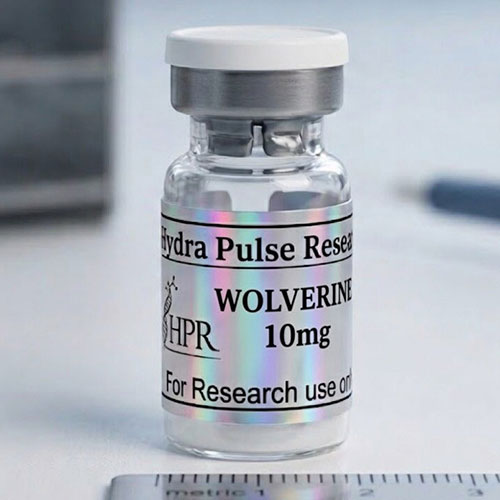
BPC-157 (Body Protection Compound) has been characterized in published research for its role in angiogenesis, growth-factor expression, and gastrointestinal protection. TB-500 (a fragment of Thymosin Beta-4) is studied for its role in actin sequestration, cell migration, and stem-cell mobilization to sites of injury. Together, they represent two complementary mechanisms of action — vascular and growth-factor signaling on one side, cell mobility and matrix dynamics on the other — making the combination a popular subject of synergy research.
Common research applications include: combinatorial studies on soft-tissue repair kinetics, in vitro fibroblast and endothelial migration assays, preclinical models of tendon and ligament recovery, post-injury inflammation research, and comparative studies evaluating combined versus single-compound exposure. Investigators frequently use Wolverine as a baseline combinatorial reference compound when designing larger peptide-stack experiments.
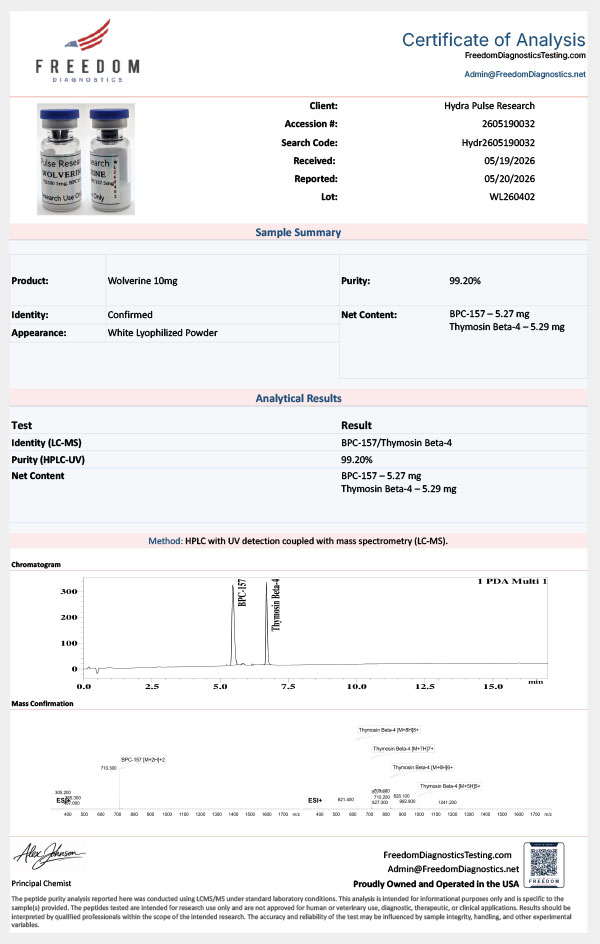
Hydra Pulse Research Wolverine ships as a sterile lyophilized powder in tamper-evident vials, accompanied by a Certificate of Analysis documenting each component peptide’s identity, mass, and HPLC purity. The blend is manufactured under sterile conditions in an ISO-grade facility, and the precise per-vial ratio is documented so researchers can replicate or modify the stack in their own protocols.
Reconstitution: dissolve in bacteriostatic water for injection-format research, or sterile water for in vitro work. Storage: keep the lyophilized vial frozen at -4°F to -20°F for long-term stability. Once reconstituted, refrigerate at 36°F–46°F and use within 28 days. Avoid repeated freeze-thaw cycles of the reconstituted solution.
Why a pre-formulated blend? Researcher-mixed combinations introduce dosing variability that can confound study results. A pre-formulated, lab-verified blend like Wolverine eliminates that variable, allowing investigators to focus on experimental design rather than reconstitution arithmetic. The lyophilized format also extends shelf life compared to pre-mixed liquid preparations.
Hydra Pulse Research is committed to providing fully documented, lab-verified peptide blends. Our COAs travel with every shipment, our manufacturing partners meet ISO standards, and our team is responsive to questions about batch documentation, ratios, and combinatorial design considerations.
Wolverine is sold strictly for research use, in vitro experimentation, and educational purposes. It is not a drug, supplement, food, or cosmetic, and is not intended for human consumption or for the diagnosis, treatment, or prevention of any disease. Purchasers must use the material exclusively in lawful, controlled research settings.
Wolverine is a research peptide blend combining BPC-157 and TB-500 — two of the most extensively studied compounds in regenerative peptide science — into a single, pre-formulated, lyophilized vial. The combination is named for the popular research framework around accelerated tissue-repair investigation, and it has become a standard combinatorial tool in laboratories exploring how complementary regenerative pathways interact. Hydra Pulse Research supplies Wolverine at 99%+ component purity with full third-party verification.
$64.00
10 in stock
All products sold on this website are for laboratory research use only. They are not intended for human consumption, medical use, or cosmetic use. By purchasing, you confirm that you are a qualified researcher and understand the proper handling and storage procedures for research-grade materials. No medical claims are made or implied.
Price range: $66.00 through $96.00