Unlike peptides that act through cell-surface receptors, SS-31’s alternating cationic and aromatic residues give it a strong, selective affinity for cardiolipin — a phospholipid found almost exclusively on the inner mitochondrial membrane. Published research has characterized this cardiolipin interaction as central to SS-31’s mechanism of action: stabilizing cristae architecture, reducing electron leak and reactive oxygen species production, and supporting ATP synthesis under conditions of mitochondrial stress. The D-amino acid at the N-terminus confers resistance to proteolytic degradation, extending the peptide’s stability in experimental systems.
Common research applications include: in vitro and in vivo models of ischemia-reperfusion injury in cardiac and renal tissue, investigations into age-related mitochondrial decline in cardiac and skeletal muscle, glomerular and tubular injury models in kidney research, and studies of alpha-synuclein aggregation relevant to neurodegenerative disease research. SS-31 is also a frequent reference compound in mitochondrial biology protocols examining proton leak, membrane potential, and redox homeostasis. The broader elamipretide research program — which informed the FDA’s 2025 accelerated approval of an elamipretide-based therapy for Barth syndrome — has produced an unusually deep body of published data for investigators working with this compound.
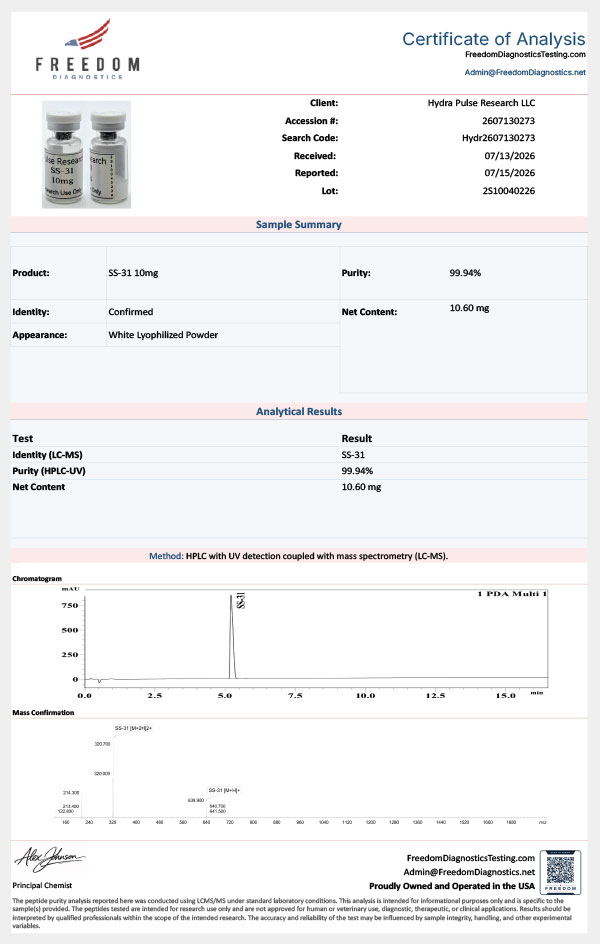
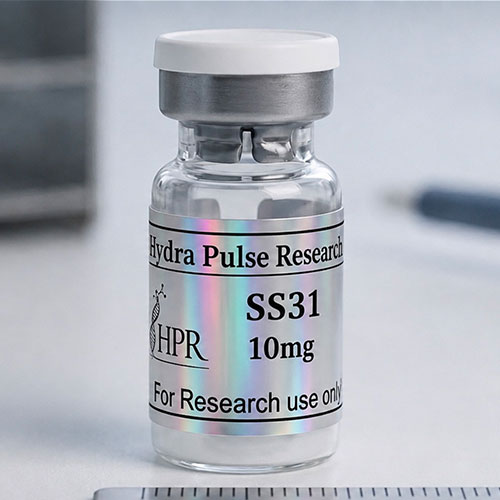
Each vial of Hydra Pulse Research SS-31 is manufactured in an ISO-grade facility, lyophilized for long shelf life, and shipped with a Certificate of Analysis (COA) detailing peptide identity, mass spectrometry confirmation, and HPLC purity. We do not bulk-source from unknown intermediaries — every batch is tested before release